
 THE INK編集部
 Cover-up tattooing conceals or transforms an existing tattoo by working a new design over it. It is an important skill for tattoo artists. This guide takes a professional look at the fundamentals of cover-ups, practical design options, and the tattooing process.
What Is a Cover-Up Tattoo?
A cover-up can conceal all or part of an existing tattoo, or incorporate elements of the original into a new design. The practice has evolved alongside tattoo culture into a distinct area of technical and creative expertise.
History of cover-up tattoos
Cover-up tattoos began to develop in earnest around the 1970s, and are now a common technique offered in many tattoo shops.Early cover-ups often relied on solid black fill. Modern techniques can instead transform an unwanted tattoo into a carefully designed piece of art.
Historically, cover-ups developed in response to tattoos people had come to regret—military-related names, a former partner’s name, or poorly executed work from their youth. Today, clients may seek a cover-up because of a lifestyle or career change, or simply because the original design no longer suits them.
Some clients find that an existing tattoo creates difficulties when applying for a new role, while others want a more mature design as they get older. Requests to update an older tattoo with a contemporary design have also become more common as styles change.
Types of Cover-Up Tattoos
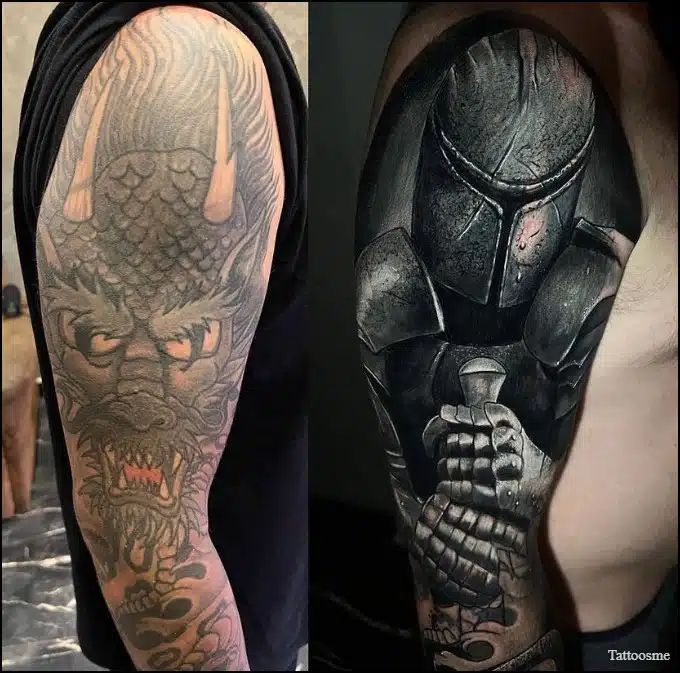
Cover-ups generally take one of three approaches: concealing the existing tattoo completely, correcting only part of it, or incorporating the original design into a new composition.Completely concealing an existing tattoo usually requires a new design that is both larger and darker than the original.
The type that makes use of part of an existing tattoo is a method of correcting only the problem areas. The original design type is the most creative approach, utilizing an existing tattoo as part of a new design, and requires a high level of technical skill and artistic flair to meet the client’s wishes.
Cover-Up Tattoo Design Options
The new design must account for the existing tattoo’s color, size, and placement. A successful cover-up depends on strategic design choices and advanced tattooing skill.
Cover-Ups with Traditional Japanese Tattooing
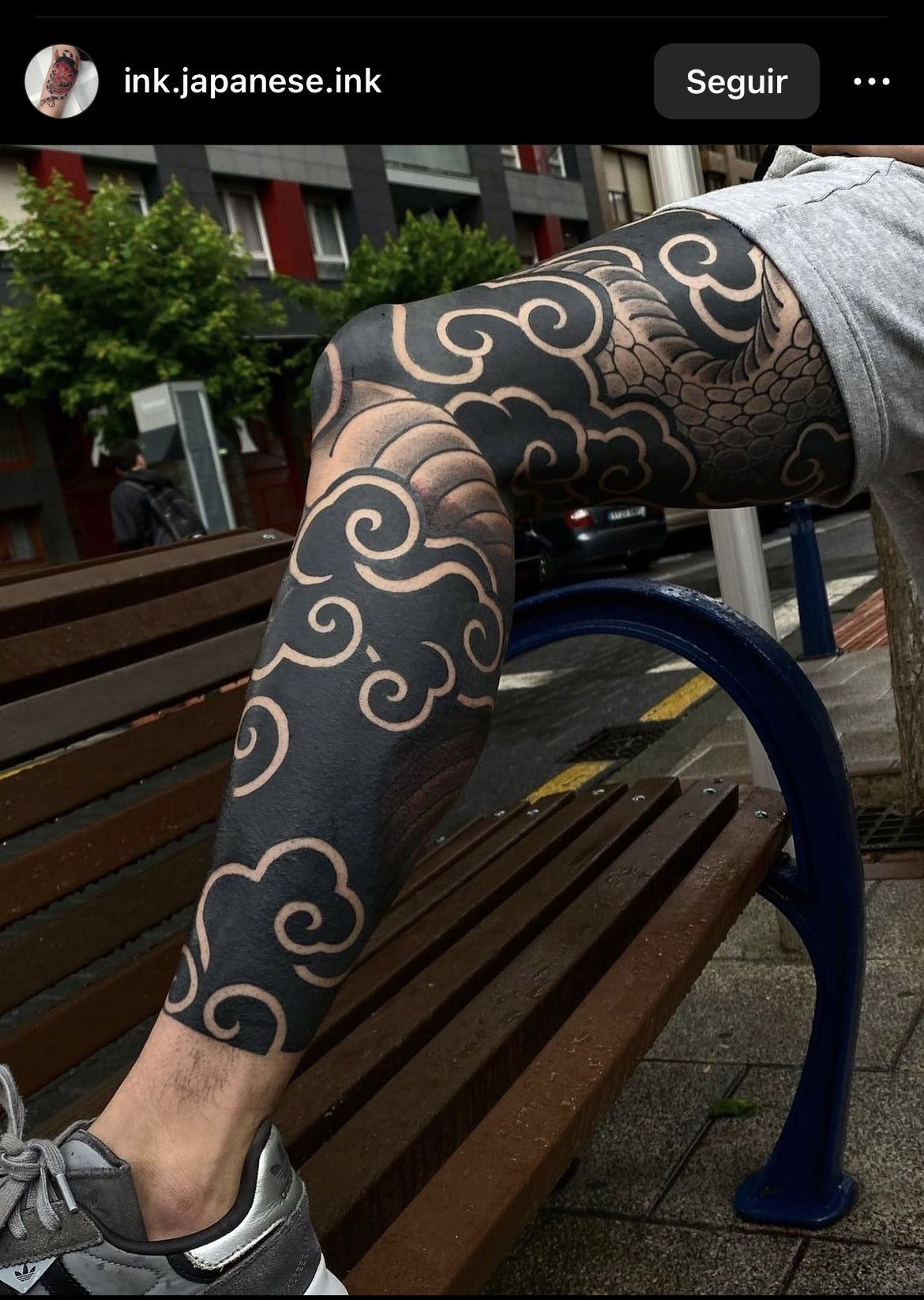
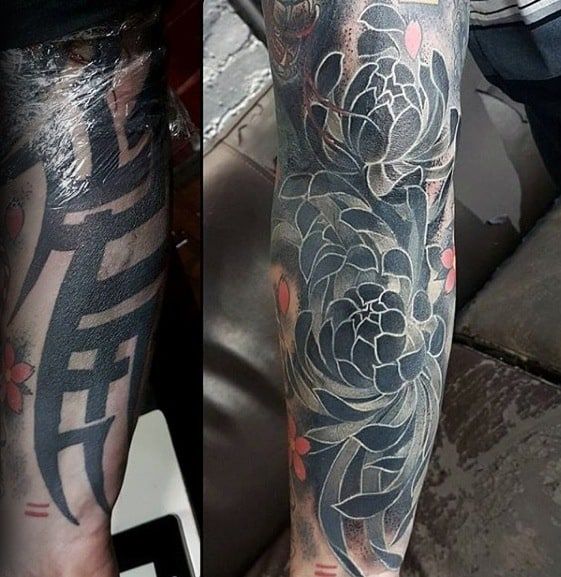
Traditional Japanese tattoos are characterized by their deep black color and bold lines, making them one of the best styles for cover-up tattoos.Traditional motifs such as dragons, phoenixes, Hannya masks, and peonies use rich shading and strong tonal contrast that can effectively conceal an existing tattoo.
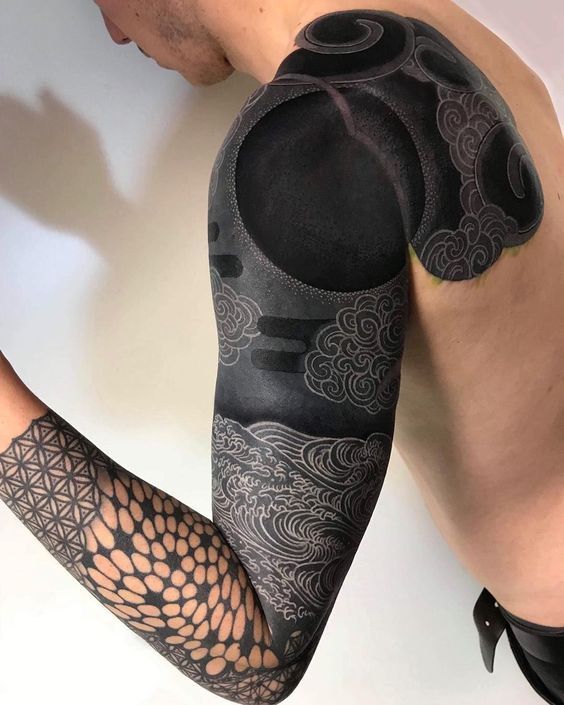
Background framing such as waves and clouds can naturally camouflage an irregularly shaped tattoo. Bokashi, the soft shading technique characteristic of traditional Japanese tattooing, helps blend the boundary of the old piece into a cohesive new composition.
Blackwork and Tribal Design
Blackwork is a style that boldly uses dark black ink and is highly effective for covering up pale or small existing tattoos.Geometric shapes, mandalas, abstract patterns, etc. are flexible enough to be applied to any existing design shape.
Tribal design
Tribal designs can similarly cover up a variety of existing tattoos due to their thick lines and solid black nature. Contemporary tribal designs are also popular, with modern twists on traditional Polynesian patterns.
Realistic Portraits
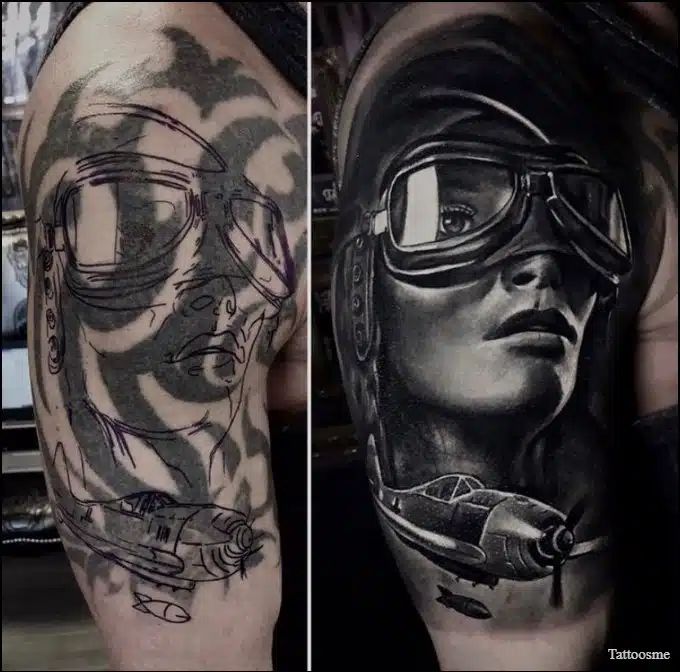
Realistic portraiture requires specialized skills, but it has the potential to transform existing tattoos into fine art-quality artwork.Realistic expressions of human faces, animals, landscapes, etc. can be created by cleverly incorporating the lines and colors of existing tattoos as part of the shadows and shading.
This style places the darkest parts of your existing tattoo into the darkest parts of your new design, utilizing gradients to achieve a natural-looking finish. Animal portraits in particular can effectively hide existing tattoos through fur texture and shading.
Floral and Ornamental Designs
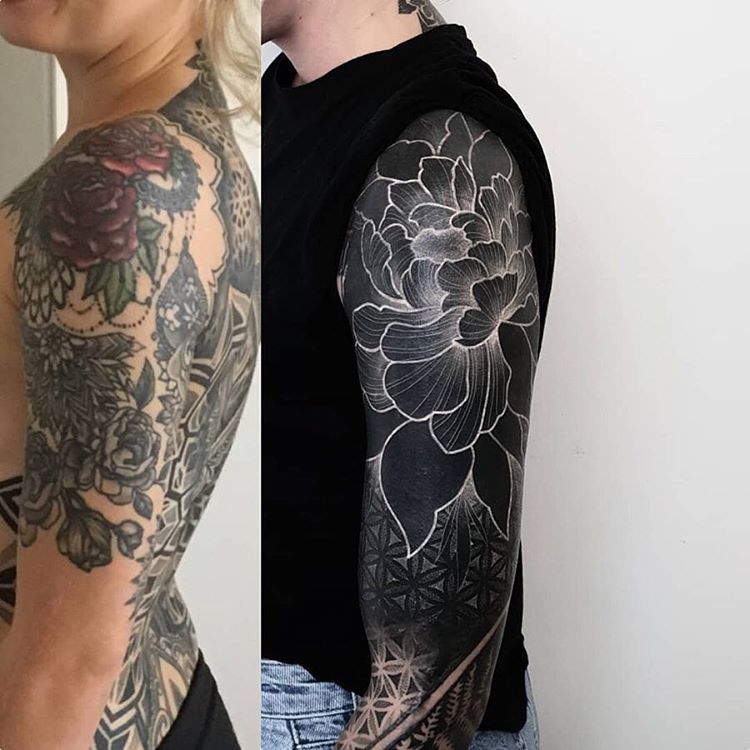
Floral designs with flower and plant motifs can naturally camouflage the linear elements of existing tattoos due to their organic shapes.Flowers such as roses, peonies, and lotuses can effectively hide existing designs with their intricate overlapping petals.
Ornamental designs utilize decorative elements and incorporate existing tattoos as decorative elements in new designs. Lace patterns, arabesques, Victorian ornaments, and more can turn the irregular shapes of your existing tattoo into beautiful decorations.
The Cover-Up Tattoo Process
Cover-up tattoos are more complex than regular tattoos and require careful planning and advanced technique. Taking the proper steps is essential for a successful cover-up.
Initial Consultation with the Tattoo Artist
The consultation is one of the most important stages of a cover-up. The artist must assess the existing tattoo in detail while listening carefully to what the client wants from the new design.Be sure to closely examine the color, depth, age, and condition of your existing tattoo to determine how much cover-up is possible.
Design Planning
Design involves tracing the client’s tattoo onto tracing paper and overlaying the new design on top of it to determine the best cover-up method. At this stage, it is important to present multiple design options and have detailed discussions with the client.
Ink selection
Cover-up work requires a strong understanding of color theory. Complementary tones and darker values must be chosen carefully to neutralize or conceal the existing color.For example, use complementary colors to neutralize existing colors, such as using a green color for an existing red tattoo and an orange color for a blue tattoo.
Generally speaking, you should use a darker ink color than your existing tattoo. Dark-colored inks such as black, dark brown, and navy blue are the most effective, but high-quality cover-up inks have recently been developed, so please consider using them.
Using a Layered Approach
A layered approach builds the cover-up gradually over multiple tattoo sessions, adding inks of different colors and concentrations at each stage.In the first session we apply colors to neutralize the existing tattoo, in the next session we add the base colors for the new design, and in the final session we add details and highlights.
This technique prevents the colors of your existing tattoo from showing through and maximizes the color of your new design. It is important to allow an appropriate healing period between each session.
Aftercare
Aftercare for a cover-up may require more attention than for a standard tattoo. It is important to monitor both healing and how well the new color settles.Due to the multiple layers of ink, the healing period may also be longer than usual.
Give the client thorough aftercare instructions and arrange appropriate follow-up checks. Any areas where the color has not settled evenly can be addressed with an additional touch-up session.
Precautions for cover-up tattoos
In order to make a cover-up tattoo a success, specialized techniques are required that are different from regular tattoos. By understanding these points, you will be able to provide higher quality cover-ups to your clients.
How the Existing Tattoo Affects the Result
Existing tattoos are best suited for cover-up when they are completely healed and the color is stable.New tattoos are darker and may still be changing under the skin, so they are not suitable for cover-ups.
Older, faded tattoos are often easier to cover. However, a very old tattoo may be associated with changes in skin texture that affect ink retention. Skin that has undergone laser removal should be assessed with particular care.
Skin characteristics and ink retention
With cover-up tattoos, the ink is already in the skin, so you need to understand that the retention rate and color development of the new ink will be different from normal tattoos.The space that the existing ink occupies within the skin will change the penetration and diffusion pattern of the new ink.
Also, the elasticity and thickness of the skin may have changed in the area of the existing tattoo. Taking these factors into consideration, techniques for adjusting the depth and angle of the needle and the amount of ink are important.
Size and position constraints
An effective cover-up often needs to be 20–30% larger than the original design and may sometimes need to extend into an adjacent area of the body.Existing tattoos, especially those in narrow areas such as wrists and ankles, limit cover-up design options.
Positional constraints are also an important factor. Joints and areas with significant skin expansion and contraction require special consideration to prevent distortion of the cover-up design. Be sure to also consider your client’s lifestyle and occupation to determine the appropriate size and location.
Cover-up costs
A cover-up may cost roughly 1.5–2 times as much as a standard tattoo. Because multiple sessions are often required, clients should receive an estimate for the total project.A complex cover-up may require three to five sessions, with four to six weeks of healing time between sessions.
It is important to provide the client with a detailed explanation of costs and duration during the initial consultation, and to inform the client of any additional costs that may be incurred. Offering installment payments or session packages may also be effective options for client consideration.
Summary
Cover-up tattooing is an advanced discipline that can transform an existing tattoo into a new work of art. Success depends on a careful assessment of the old piece, appropriate design choices, an understanding of color theory, and a well-planned sequence of sessions.
From traditional Japanese tattooing to modern blackwork and realistic portraiture, a broad command of styles gives artists more ways to meet a client’s needs. Cover-ups are technically demanding, but a successful result can be deeply satisfying for the client and highly valuable to an artist’s development.
Developing strong cover-up skills enables a tattoo artist to serve a wider range of clients. Continued practice, technical study, and hands-on experience are the path to expertise in this specialty.