
 THE INK編集部
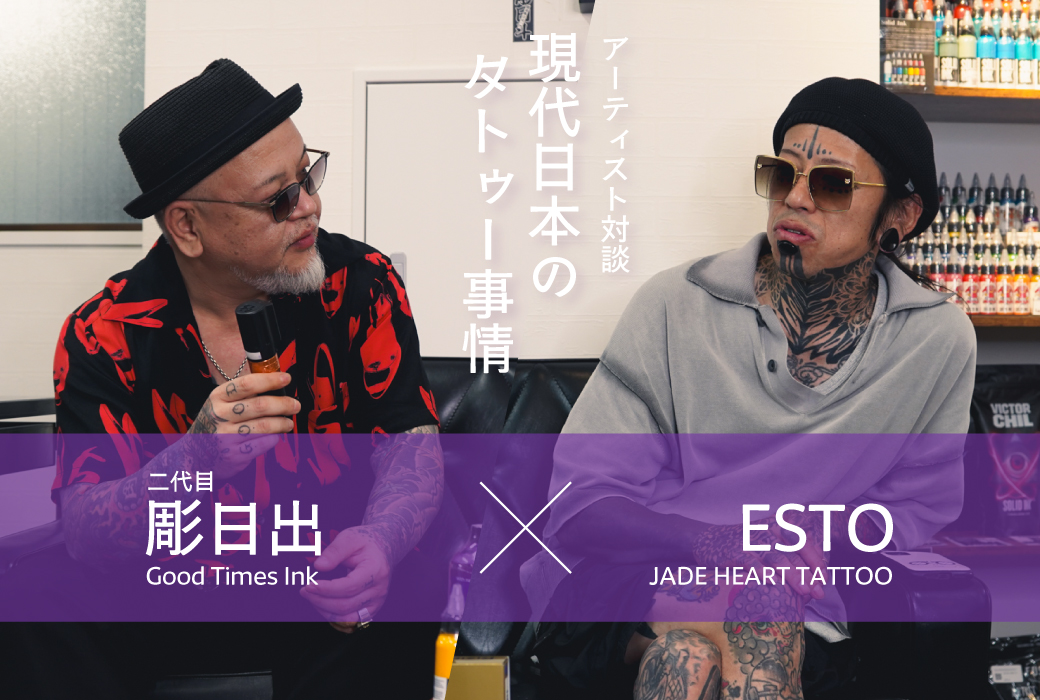
 Working at the intersection of tradition and innovation in Japan’s uniquely evolved tattoo industry, two of the country’s leading tattoo artists with 30-year careers—Second-generation Horihide and ESTO—visited THE INK to talk with us about tattooing and tattoo supplies in Japan today.
Second-generation Horihide: Profile
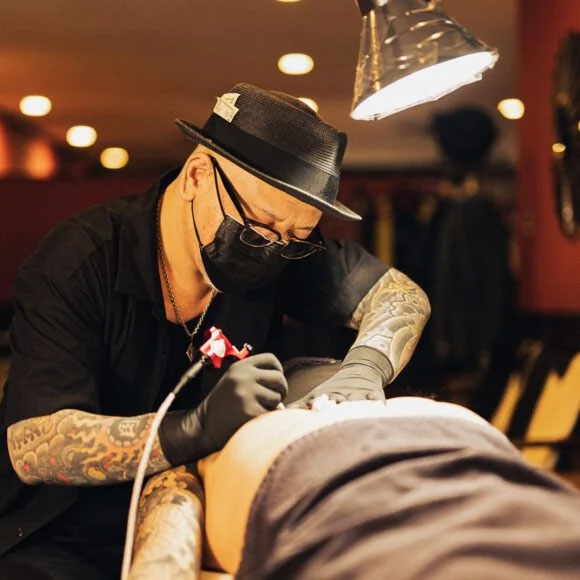
A tattoo artist with 30 years of experience and the owner of Good Times Ink in Osaka’s Amerikamura, one of the largest tattoo studios in the Kansai region.
Drawing on an apprenticeship in traditional Japanese tattooing and experience at tattoo shops overseas, he creates authentic Japanese and Western-style tattoos. He brings his own interpretation to a broad range of styles, producing one-of-a-kind work every day.
Instagram: @horihide_2
ESTO: Profile
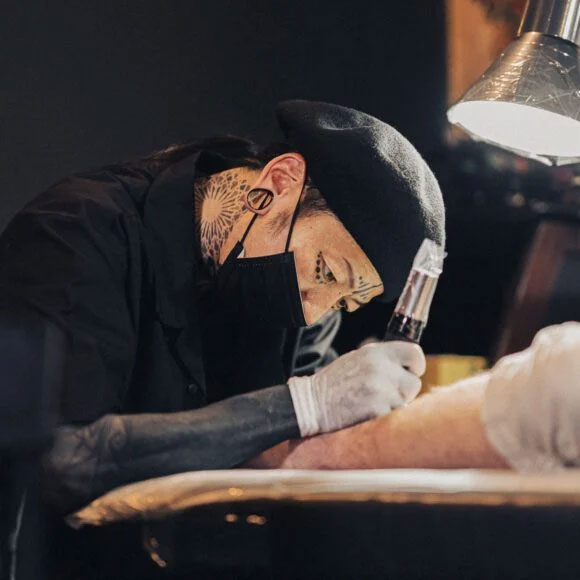
Owner of JADE HEART TATTOO in Osaka’s Amerikamura.
With a varied background that includes graffiti art and extensive experience in overseas tattoo studios, ESTO specializes in styles central to tattoo culture, including American traditional and new school. He also works regularly as a guest artist at GOOD TIMES INK in Amerikamura.
Instagram: @enotse06
Interview
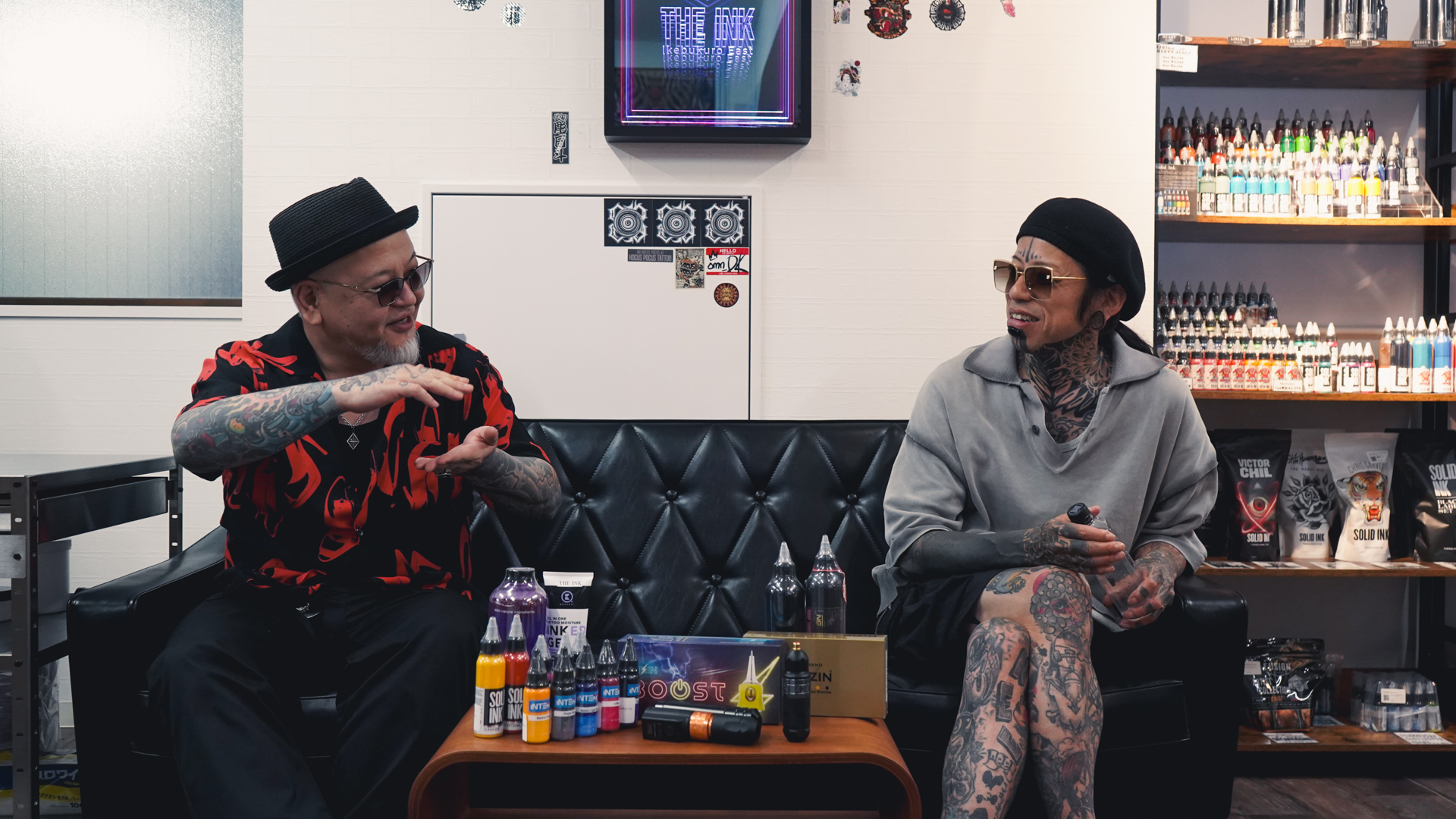
What was the tattoo scene—including access to tattoo supplies—like when the two of you began your careers?
Second-generation Horihide (hereafter, Horihide)
In the 1990s, we would arrange loose tattoo needles in a tool called a jig and solder them together to make our own. My mentor showed me, and I remember thinking, “Oh, so this is how you make them.” It was not only the technique; every tattooer was experimenting and figuring out the tools for themselves too.
ESTO
It was almost 30 years ago now. I would travel overseas, watch how tattooers there worked, and learn things like how they grouped their needles. We also used jigs to line up and assemble our own needles. There were no premade needles back then.
I imagine it was much the same for Horihide.
That must have been a lot of work, wasn’t it?
Horihide
It seemed normal at the time, but looking back, it was difficult and time-consuming. We would make them in batches and pack them up. Autoclaves were hard to obtain, and there were no dedicated sterilization pouches. We even coated the needles with a white, flour-like powder to keep them from rusting.
Come to think of it, every tattoo station had Isodine around for disinfecting needles back then too (laughs).
At first, we used pressure cookers (laughs). Anything that needed sterilizing, such as needles and grips, was sterilized in a pressure cooker. Medical facilities probably had autoclaves, but they were not something an ordinary person could easily buy.
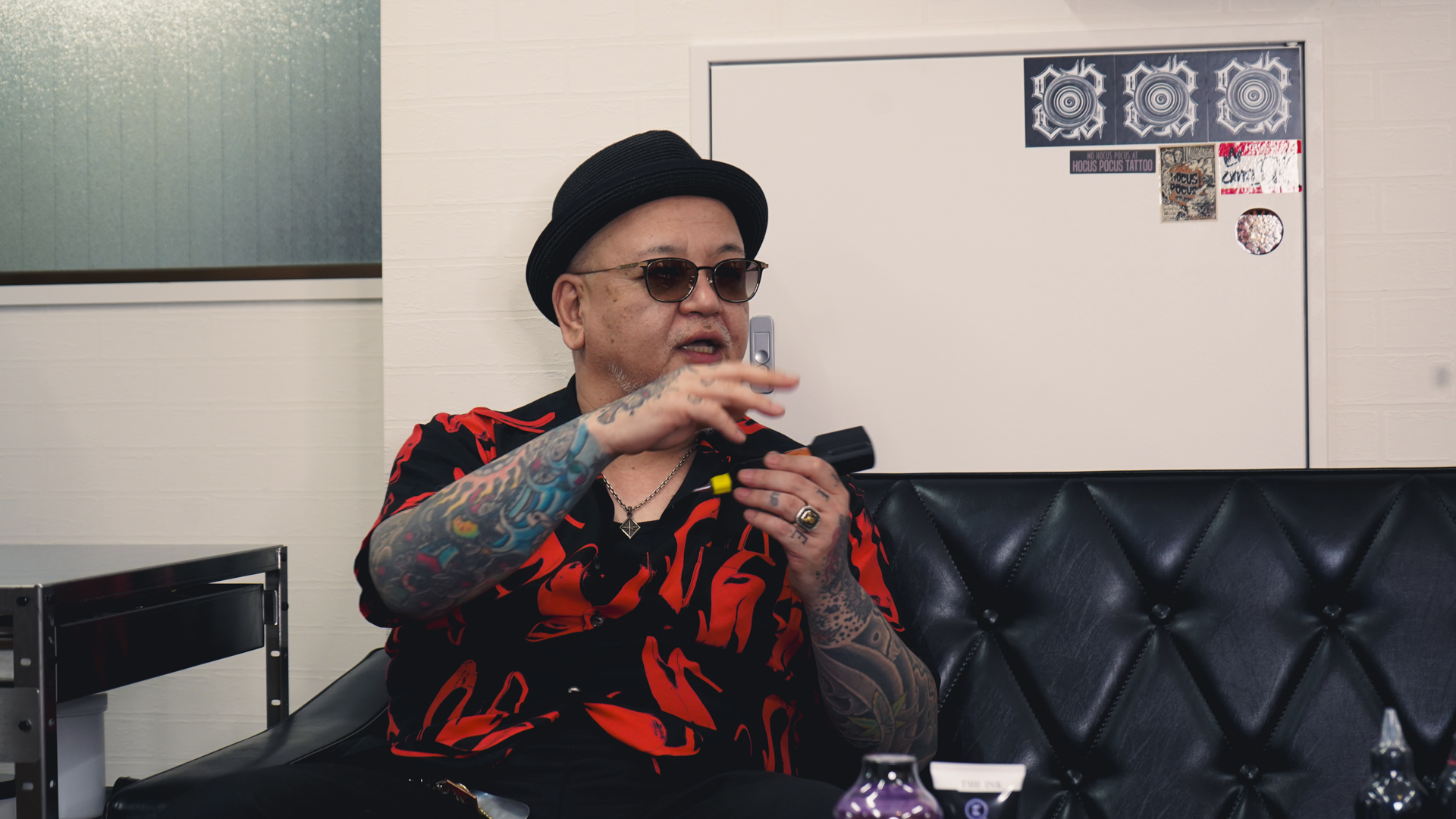
Once ready-made, sterile needles that could be used straight from the package went on sale, did they catch on right away?
Horihide
No. Early on, premade needles were lower quality. There was a period when the ones we made ourselves were cleaner and easier to use. Their quality gradually improved, and we started trying them and working them into our practice.
ESTO
I made my own for a long time too, but the father of a Spanish tattoo artist I met made needles professionally. Premade needles were not available in Japan then, so I brought over some of his and started using them. They were sterilized in blister packs, much like the needles sold today.
As I kept buying and using those, premade needles like the ones we have now gradually became available.
Do you use cartridge needles for tattooing now?
ESTO
Yes.I only use pen-style machines designed for cartridges, so every needle I use is a cartridge. I think cartridges became common in Japan about ten years ago, but I had started using them roughly five years earlier. I became interested after going to Australia and seeing everyone using Cheyenne machines.
At the time, I had always used an FK Irons rotary machine. Then an artist I deeply respect told me, basically, “Of course a pen-style machine is better.” I decided to give one a try and started using an FK Irons pen-style tattoo machine.
At first, I used a coil machine for lining and a pen for shading and color packing, which was a cumbersome setup. Eventually I switched entirely to pen-style machines.
Horihide, you tattoo with a coil machine and premade needles. Is there a particular reason you remain committed to coil machines?
Horihide
I use a coil machine with premade needles. With a pen-style cartridge machine, you cannot touch the armature bar with your finger to gauge the machine’s strength as you can with a coil machine. The number on the power supply—the voltage—is not what matters most to me. That tactile feedback is essential to everything I do.
The machine needs a different amount of force depending on the client and the part of the body, so I cannot tattoo from one fixed power-supply reading. That is what made me stop using pens—or rather, realize that I could not use them.
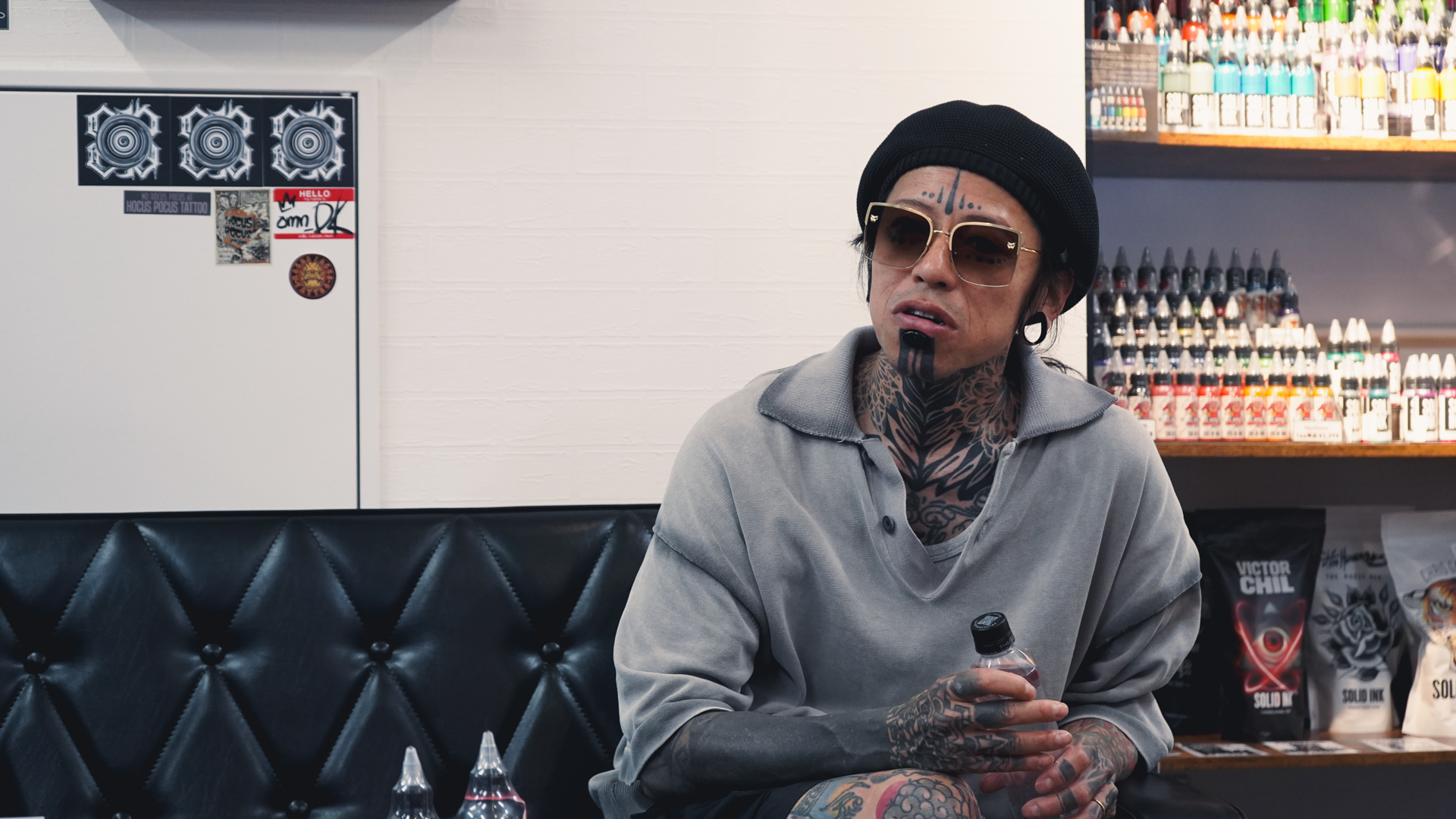
ESTO, how do you gauge the strength of a pen-style machine?
ESTO
The motion and strength vary by cartridge manufacturer because the membranes that act as springs differ in stiffness. I try to use the same cartridges consistently, but when I use another brand, I gauge it from the skin’s response—the feedback and feel as the needle goes in, you could say.
Do particular inks feel better suited to coil machines or cartridge machines?
ESTO
You mean with today’s inks, right? I no longer use coil machines with modern inks, so I cannot say for certain, but I do not think the difference is that great. I still use brands such as Eternal and Fusion that were around when I used coils, and my impression is that they perform much the same.
Horihide
Sometimes I get the sense that a particular ink would work well for hand-poking. Some colors have a kind of chalky quality—white or skin tones, for example. Inks that settle with that powdery look would probably suit hand-poking.
It is not about being watery or thick. It is hard to describe—more of a chalky quality.
Which tattoo inks do you use most often?
ESTO
I do not have one definitive favorite right now. If one manufacturer does not offer a color I need, I will use another, so my palette is a mix. I probably use Intenze and Eternal most often. I use Fusion too, and Radiant has a good reputation as well.
Horihide
I mostly use SOLID INK.
I use it myself, and a lot of the artists at my studio use SOLID INK too.
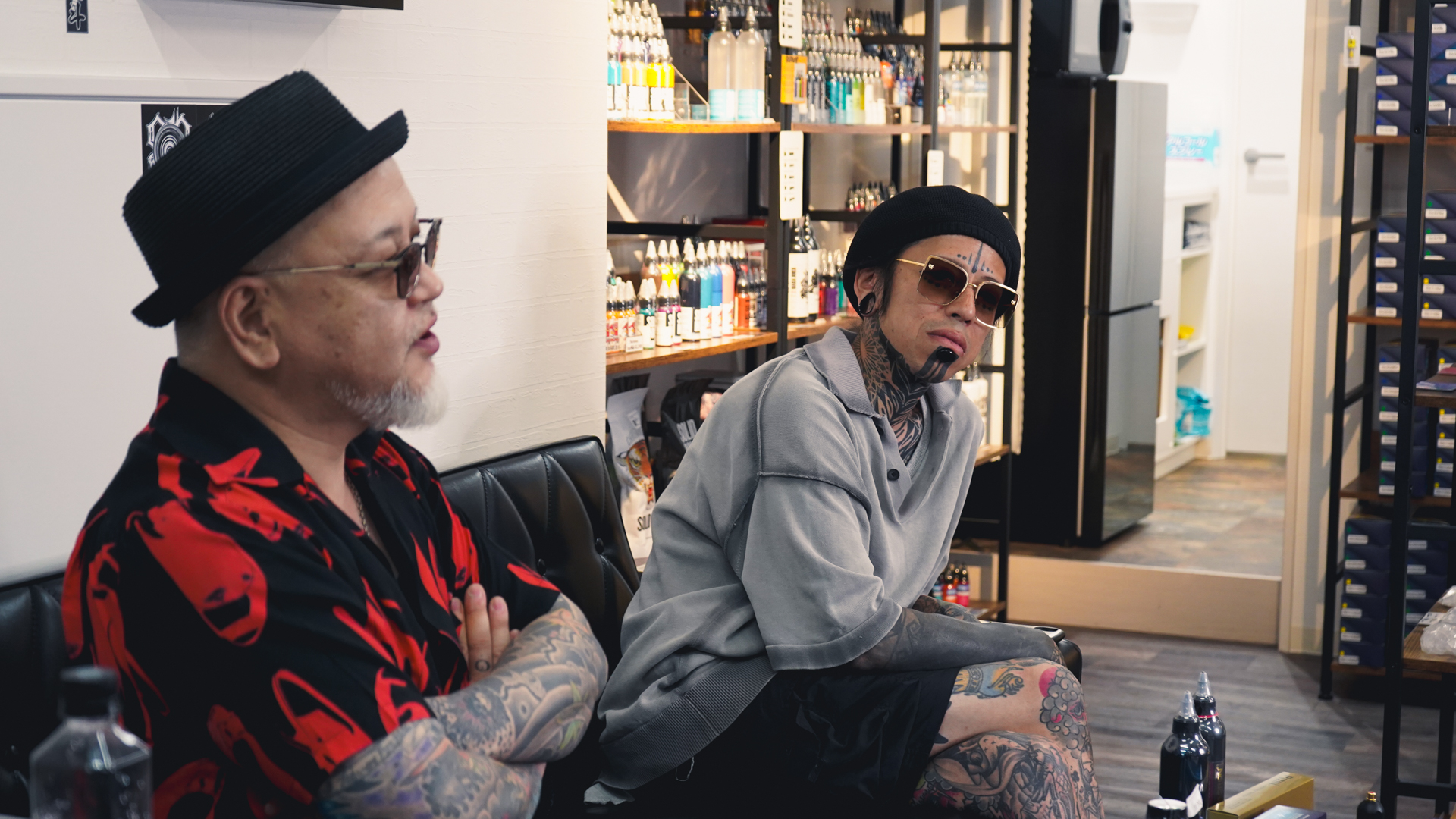
Are there any ink manufacturers you dislike?
ESTO
It is not that I dislike a particular manufacturer. With certain colors, though, I sometimes find that one brand’s pigment is hard to put in or does not develop the way I expect. Maybe I just have not mastered it yet (laughs).
If I had to name one issue, SOLID INK is quite dense and heavy, so it can take more effort to put in. Using it straight from the bottle can be difficult. I assume it is intended to be thinned with an ink solution or mixer.
Horihide
I never use ink straight from the bottle in the first place.Rather than pre-diluting it, I briefly dip into distilled water as I tattoo, so the ink never reaches the skin at full concentration. I do that with every ink. I do not tattoo by driving in a heavy, solid hit of pigment.
When I learned Japanese tattooing, I fell in love with the clear, translucent way my mentor’s machine work laid in color. I still want that finish even when I am doing Western-style work. This is the method I developed to recreate that translucency in my own pieces.
How is that different from diluting the ink in the cup beforehand?
Horihide
It is different. I may decide that one area needs to be closer to full strength, for example, and adjust the concentration very precisely from one part of the piece to another.
ESTO and I work in completely different ways. He builds a tattoo almost like an airbrush. With the way I tattoo, the water would probably get in your way, wouldn’t it?
ESTO
Yes, it would (laughs).
Horihide
So, I do not think either approach is the one correct answer; it is a difference in artistic expression, you could say.
ESTO, you set out every ink color you will use before you begin, right?
Typically, you would start by setting out the blacks and finish the lining and shading. Then, before moving into color, you would prepare the color inks and proceed in stages.
If I set out every color at the start, they would dry before I finished. ESTO tattoos so fast that the whole piece is done before his inks can dry (laughs).
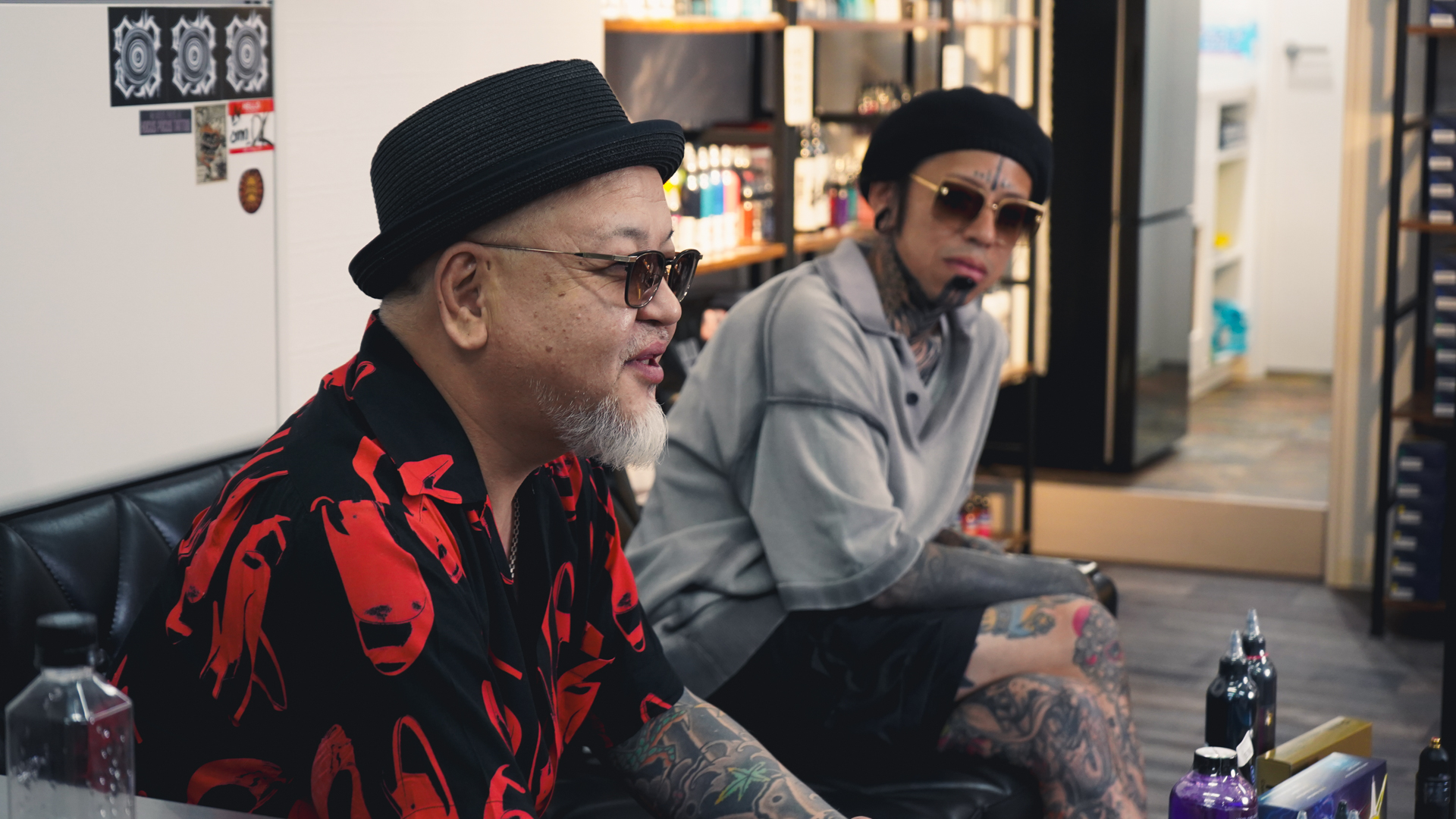
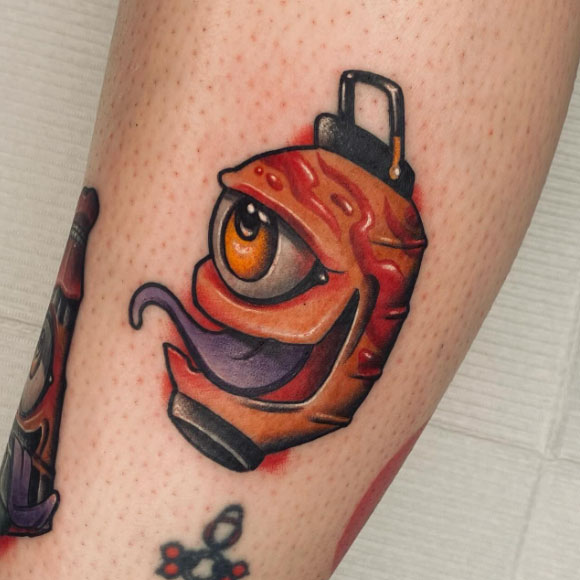
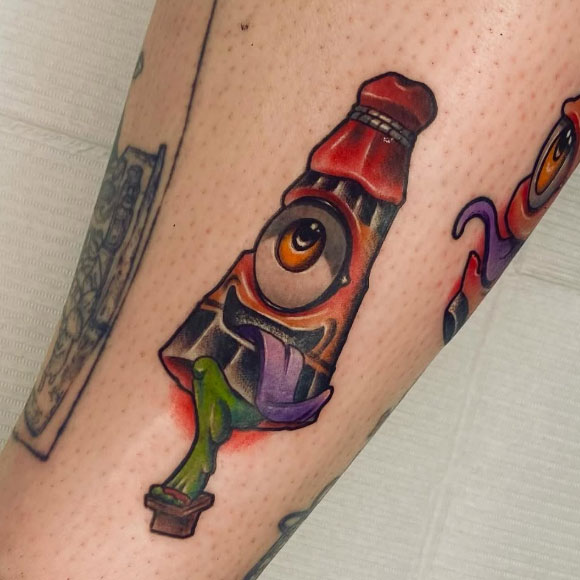
Are you really that fast, ESTO? How long would a piece like this take?
ESTO
Each one is a little larger than a pack of cigarettes, and tattooing both takes about two and a half hours—something like that.
How many colors did you use in these pieces?
ESTO
Let me think…one black, two reds, two purples, and three grays. For the yellow eyes, there were three colors—a brown and two yellows—plus another brown, and one white for highlights. Around 12 colors in all, I think.
That is more colors than I expected. Do you follow a set order while tattooing?
ESTO
I just wing it…really.
Horihide
You do not just wing it. There has to be some method (laughs).
ESTO
No, I really do (laughs). I work by feel in the moment, so there are not many fixed rules.
I put in black first and leave obviously lighter colors until later, but I might work from the bottom upward or start from the side. It depends on the piece and how I feel at the time.
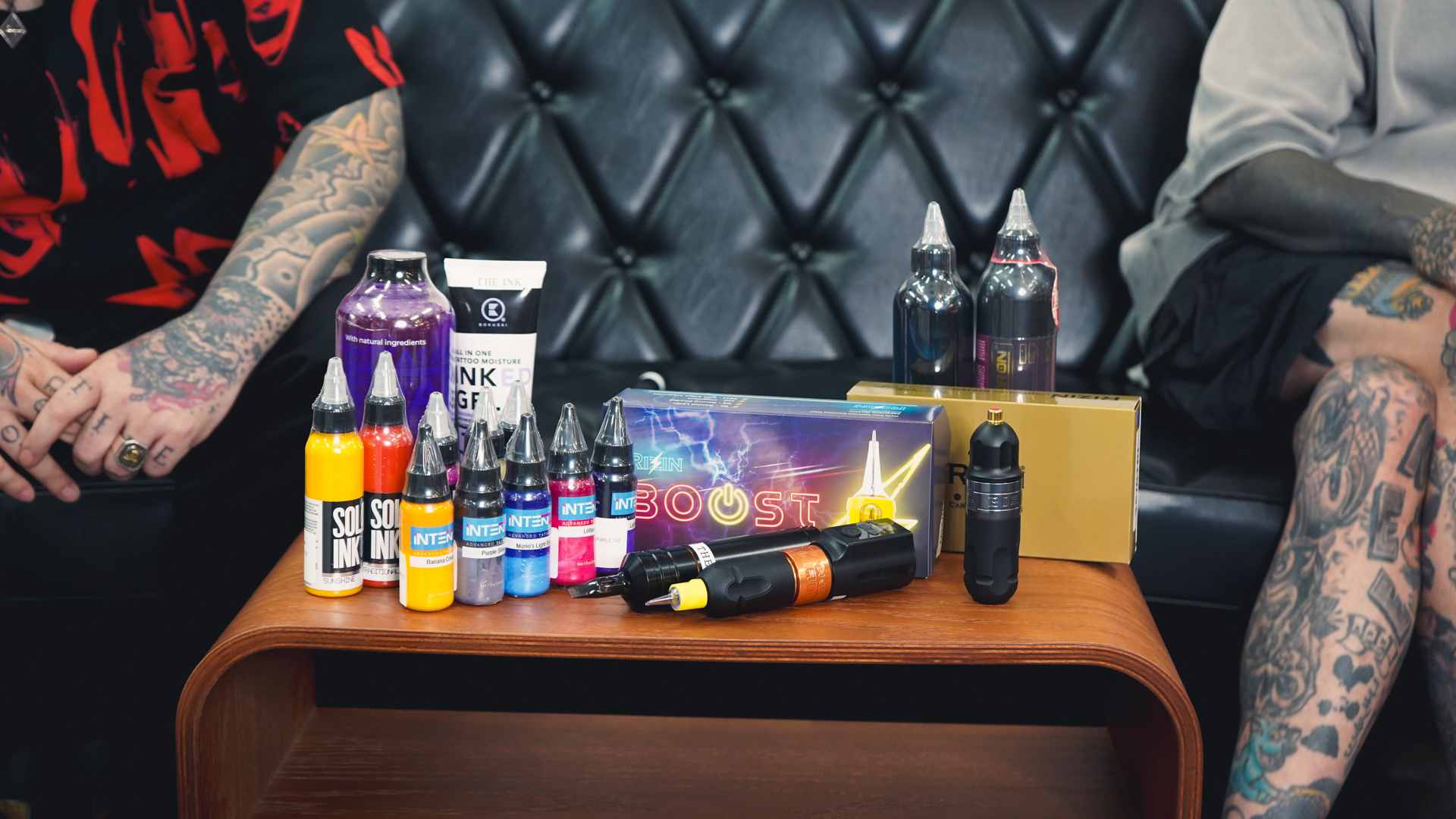
As tattoo supplies have improved, how has the range of artistic expression changed?
ESTO
The expressive possibilities are dramatically greater than they used to be.
Black and gray once had a fairly fixed look. Now there is whip shading, black-and-gray work that uses gray ink, and many other approaches. Advances in machines and inks have greatly expanded what we can express, wouldn’t you say?
With color ink, for example, colors that could not be achieved or would not hold in the past can now be used because machines and inks have improved. We often used to say, “You could use this color in a painting, but it would never stay in the skin as tattoo ink,” or that a certain yellow would not last.
Today those colors hold vividly, and cream tones show up strongly too. I think advances in ink have made entirely new genres possible.
Color portraits used to become patchy after four or five years. Now they can still look remarkably clean after the same amount of time. The range of expression and what artists can achieve has expanded enormously, I think.
Horihide
Dressing films have transformed aftercare too. Fresh tattoos really used to scab over, but now they hardly scab at all. That change has been enormous.
What aftercare instructions do you usually give clients?
ESTO
Both my studio and Good Times Ink ask clients to leave the protective tattoo film on for three to four days, then remove it, wash the area, and moisturize.
Horihide
Aftercare is a crucial part of how a tattoo heals and ultimately looks, so we give every client detailed written instructions after the session. BOKUSAI’s Inked Gel, which THE INK also carries, is highly moisturizing and works very well for tattoo aftercare.
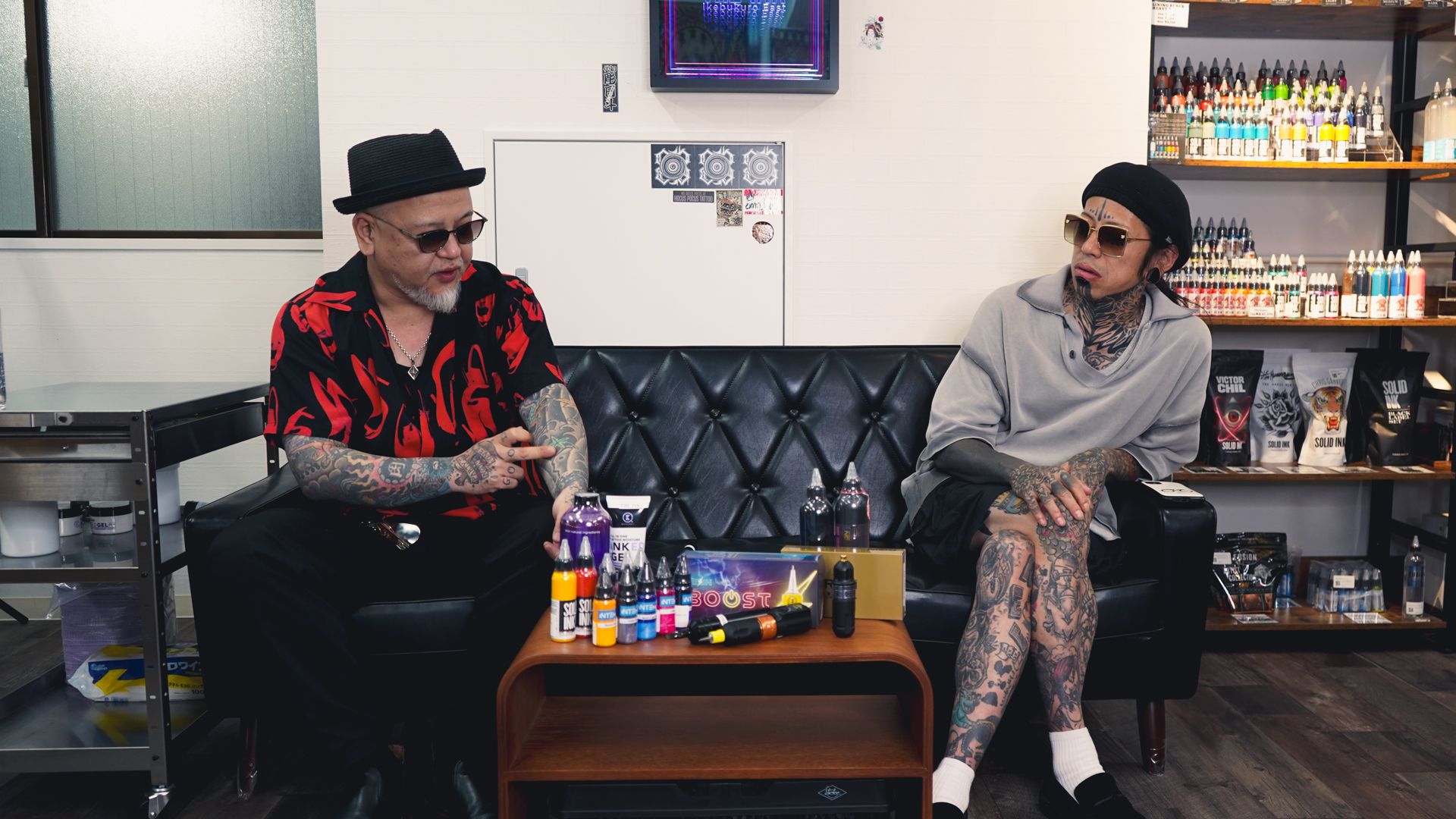
Having watched the tattoo scene for 30 years, how do you feel it has changed? Has it become less interesting or lost any of its appeal?
Horihide
There are good and bad sides to the tattoo industry, but overall I think it has moved only in a positive direction.
Personally, there was definitely something cool about tattooing when it was more underground. I miss that, and I still think that side of it is cool.
Today you see young people tattooing their faces and necks. That simply did not exist in Japan in the past. There are good things and bad things about it, I suppose.
Still, I think it is wonderful in a sense that tattooing is now open to people who are not delinquents or part of that world. Not long ago, someone outside those circles simply could not have become a tattooer.
ESTO
The old image was of someone with a rough edge studying art and becoming a tattooer. Today, someone might graduate from art school and enter the profession. Tattooing may have developed a stronger identity as art.I think it is very positive that so many genres have branched out and so many different kinds of artists have emerged.
At the same time, I sometimes wonder whether it has become a little too easy to call yourself a tattooer.
Horihide
It may be easy to start on impulse, but making a real living from tattooing is not easy. If someone can start on their own, though, I would say they should try—and I mean that positively.
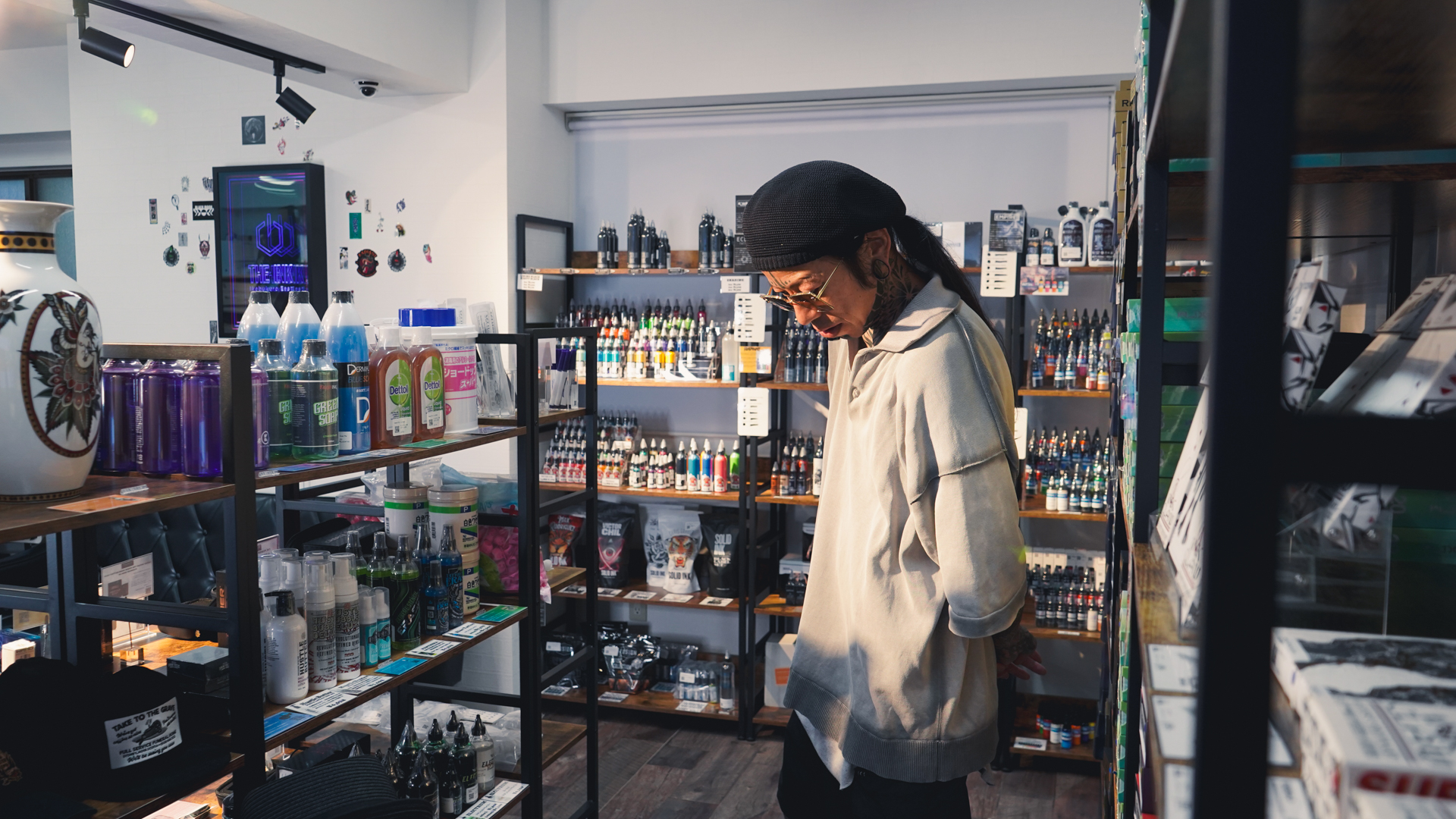
Finally, thank you for visiting THE INK and our physical tattoo-supply store. What did you think?
ESTO
It is fantastic. Thank you. I only wish there were one closer to us in Kansai.
It is incredibly helpful to hold products in your hands, see them up close, and hear an explanation. You really cannot picture a tattoo ink’s color until you see it in person. In that respect, being able to pick products up and examine them directly is a real pleasure.
Horihide
Yes, I think it is excellent. I also like how beautifully everything is displayed.
It would be even better with more coil machines (laughs). But some studios now use entirely disposable equipment and do not need an autoclave, right? I suppose that is simply where things are headed.
For young people who want to become tattoo artists, it might also be useful to offer pamphlets covering setup, hygiene, barrier protection, and basic tattooing methods—not exactly warnings, but practical guidance. I hope THE INK can become a place that helps foster skilled, responsible tattooers.
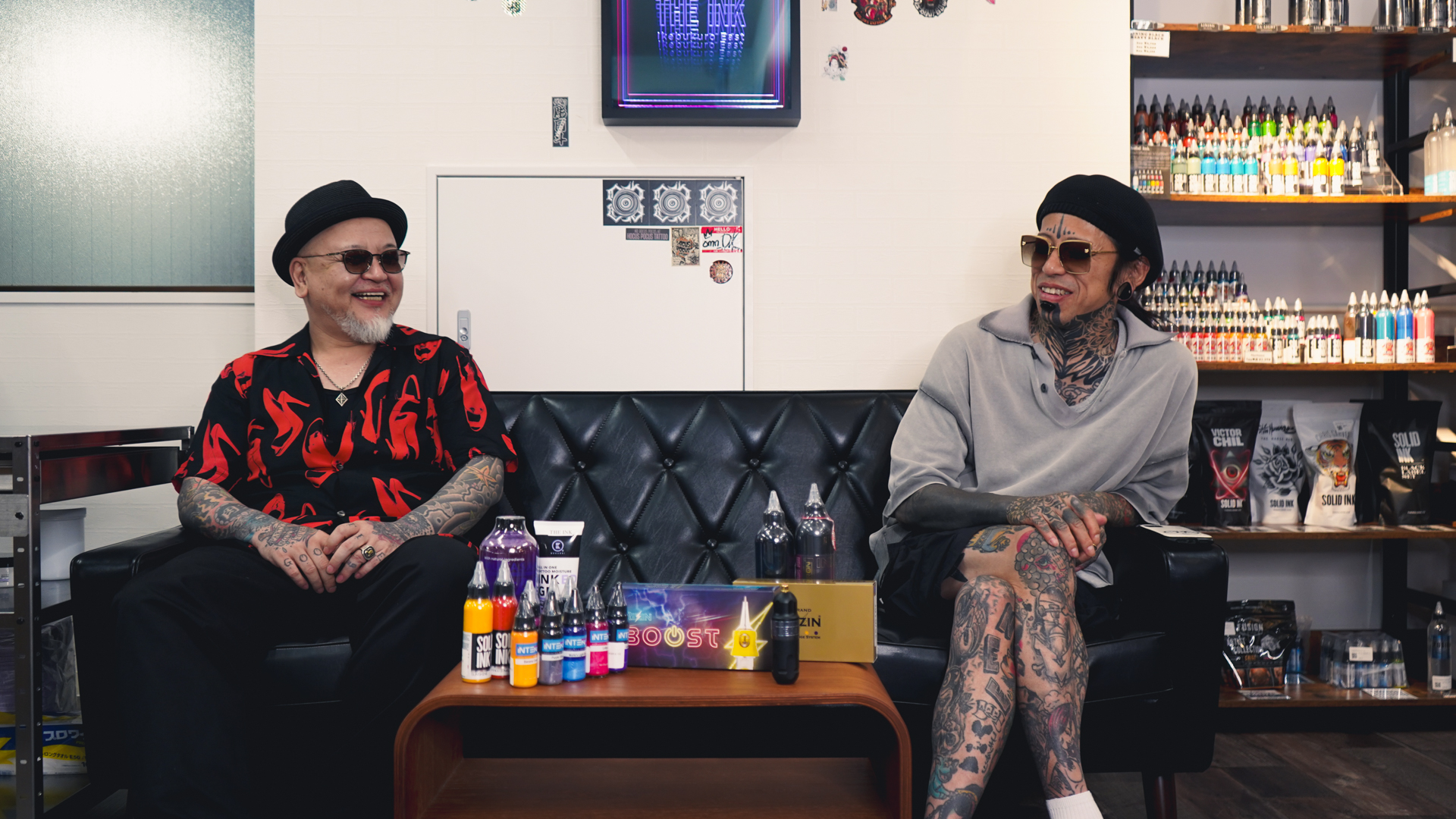
Closing Thoughts
We were privileged to hear from two artists who have lived and worked through the modern history of Japanese tattooing, including the evolution of machines, needles, and inks.
Artists and clients may differ in how they weigh the benefits and drawbacks of change. Yet the broader trend—driven by artists’ dedication and curiosity, advances in tattooing technique, and better supplies—is toward greater diversity in both expression and the people who appreciate tattoos. By giving artists and collectors more choices, that evolution ultimately seems to create greater freedom.
Thank you both very much!
Studios Run by the Two Artists
Good Times Ink, run by Second-generation Horihide (Amerikamura, Osaka)
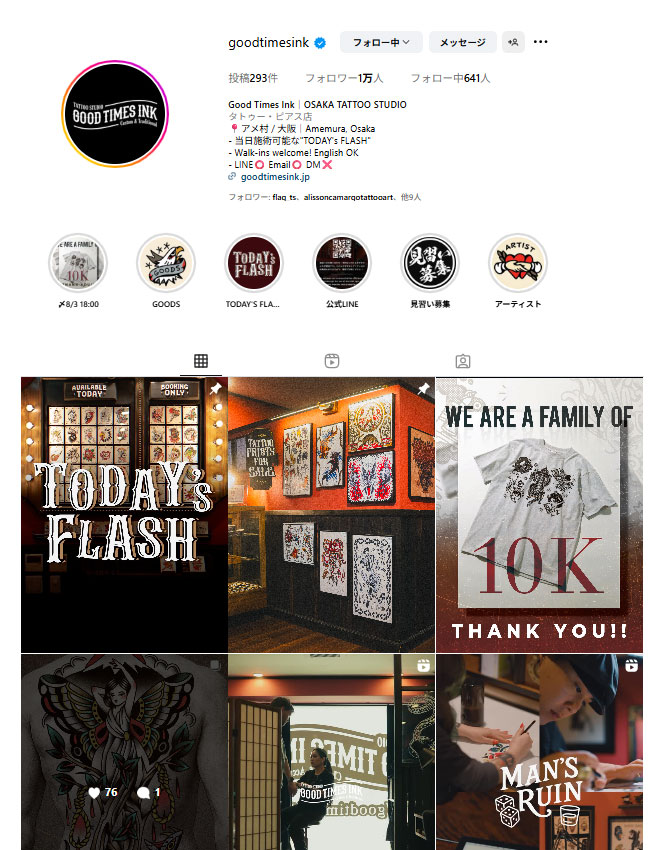
Ocean Drive 4F, 2-12-14 Nishi-Shinsaibashi, Chuo-ku, Osaka
Official website: https://goodtimesink.jp/
Jade Heart Tattoo, run by ESTO (Amerikamura, Osaka)
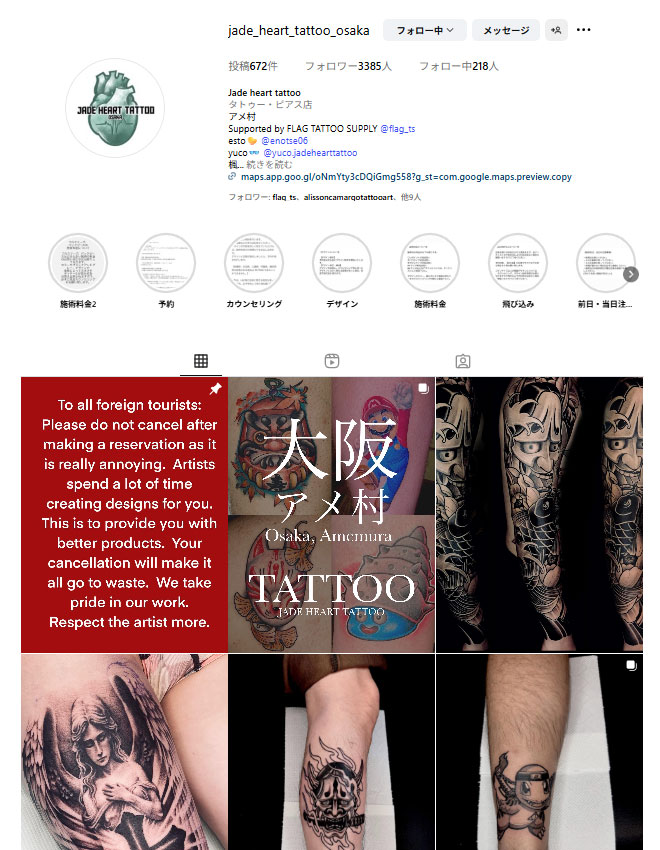
Amerikamura Square, Osaka Center Building 1F, Unit 17, 2-8-33 Nishi-Shinsaibashi, Chuo-ku, Osaka