
 THE INK編集部
 Can tattoos stop your skin from “breathing” or sweating? Here, we take a look at common tattoo myths and urban legends, along with a few personal observations.
◆ Do tattoos stop your skin from breathing?
False. Humans breathe through their lungs.
The rumor claims that getting tattooed prevents your skin from breathing. In reality, mammals, including humans, breathe through their lungs and take in oxygen that way. Even if most of your body were covered in plastic wrap, leaving your nose and mouth uncovered, you would not immediately become oxygen-deprived. Animals such as earthworms and frogs can breathe through their skin.
The myth appears to have originated with an old movie scene in which a character dies after being covered head to toe in gold paint.
◆ Can a hidden tattoo appear only when you get angry?
False. Oshiroi-bori is fictional.
The story goes that a technique called oshiroi-bori or ukibori creates an otherwise invisible tattoo that appears only when body temperature and circulation rise, such as during anger or a hot bath. No such technique exists in real life; it is simply a fictional device found in manga and novels.

The closest modern equivalents are white-ink tattoos and UV or black-light tattoos made with ink that fluoresces under ultraviolet light.
◆ Does tattooed skin stop sweating?
False. It still sweats.
The claim is that tattooing damages the sweat glands and prevents the tattooed area from sweating.
Tattoo pigment is deposited in the dermis, where sweat glands are also found, but tattooing is generally considered not to interfere with those glands. Although it was once suggested that tattoos could inhibit sweating, research and experiments have since disputed that claim.
◆ Does hair stop growing through a tattoo?
False. Hair still grows.
As with sweat glands, tattooing does not reach the deeper layer where hair follicles are located, so it does not affect hair growth.
In fact, hair and scalp tattooing—often called scalp micropigmentation—has become increasingly familiar as a way to recreate the appearance of hair follicles in thinning or hairless areas.
◆ Can people with tattoos donate blood?
True—but only temporarily.
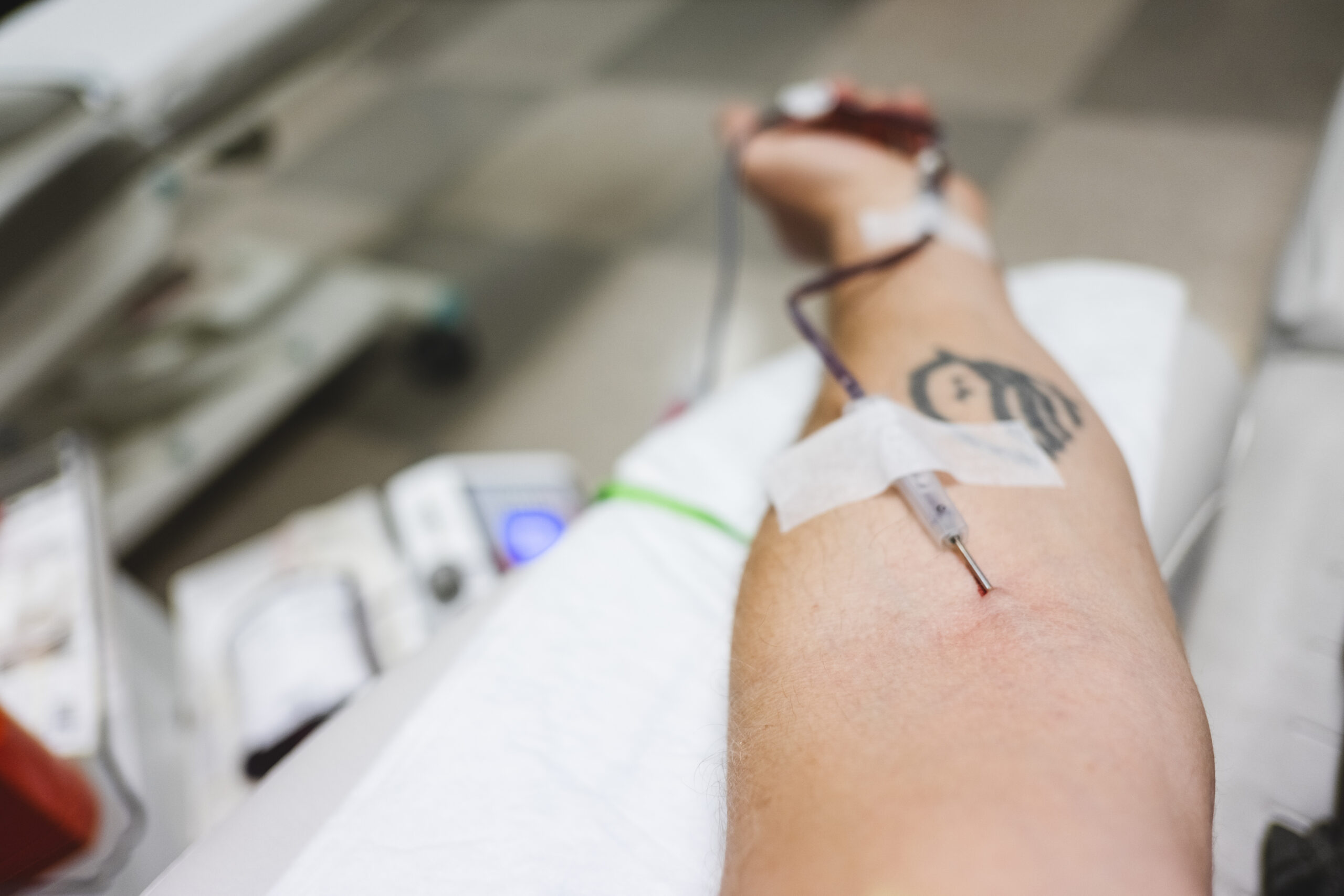
Cristiano Ronaldo has reportedly said that he avoids tattoos because he wants to donate blood. According to the Japanese Red Cross Society, people who have been tattooed within the past six months are asked to refrain from donating because viral infections such as hepatitis cannot yet be ruled out.
◆ Can tattoos prevent you from getting health or life insurance?
△ It depends on the insurer.
Japan has a universal health insurance system, so everyone must enroll in public health insurance, regardless of whether they have tattoos.
Policies for private health and life insurance vary by company.
Some insurers require applicants to disclose tattoos and may decline coverage because of concerns about links to organized crime, access to medical care, or possible infection. Other insurers do not ask applicants to disclose tattoos at all. In those cases, the tattoo itself is not considered in underwriting, meaning coverage will not be denied simply because you have a tattoo.
I contacted several insurers, but each said that eligibility depends on the individual applicant and that there is no one-size-fits-all answer.
For what it is worth, I personally hold private health and life insurance policies—one with an international insurer and the other with a Japanese company.
◆ Can tattoos keep you out of hot springs or swimming pools?
△ It depends on the facility.
As a general rule, tattoos are allowed at sento public bathhouses.
Sento are classified as ordinary public bathhouses established to provide bathing facilities necessary for everyday health and hygiene. They are governed by Japan’s Public Bathhouses Act and local prefectural ordinances.
No law directly prohibits people with tattoos from entering sento or other public bathhouses. It therefore appears that refusing admission solely because a guest has a tattoo could itself be a violation of the law.
Super sento, ryokan hot springs, and similar venues, however, are privately operated and can set their own admission policies. It is much like a restaurant dress code: operators may refuse entry to guests they consider unsuitable for the facility.
In my experience, super sento and relatively inexpensive ryokan tend to enforce tattoo restrictions quite strictly. Higher-end ryokan and hotels, by contrast, have often been more relaxed when I asked in advance. The difference may come down to how confidently each property can accommodate the concerns of other guests.
◆ Can tattoos interfere with an Apple Watch?
True. Tattoo ink can block the sensor’s light.
Apple’s support documentation has noted that permanent or temporary changes to the skin, including tattoos, may affect heart-rate sensor performance. Depending on the ink, design, and saturation, a tattoo can block the light used by the sensor and make reliable readings more difficult. In particular, it appears that the sensor on the back of an Apple Watch can be obstructed by dark tattoo ink. The issue has not been fully resolved on the Apple Watch Ultra either.

I have a black-ink tattoo exactly where the back of my Apple Watch rests. Normally, once the watch is unlocked, it should remain unlocked while it stays on your wrist. In my case, however, the tattoo seems to interfere with the sensor, so I have to unlock the watch almost every time I check it. Repeating that every few minutes became so frustrating that I now use the watch for little more than glancing at the time.
To test this for myself, I visited a clinic and tried laser removal on only the section of tattoo beneath the watch.
The doctor explained that the tattoo should be almost invisible after three sessions, and I completed the first treatment. Several months later, the area had healed and the tattoo had faded somewhat, but the watch still would not detect my wrist.
◆ Can you have an MRI if you have tattoos?
△ Usually, but the decision rests with the doctor and medical facility.
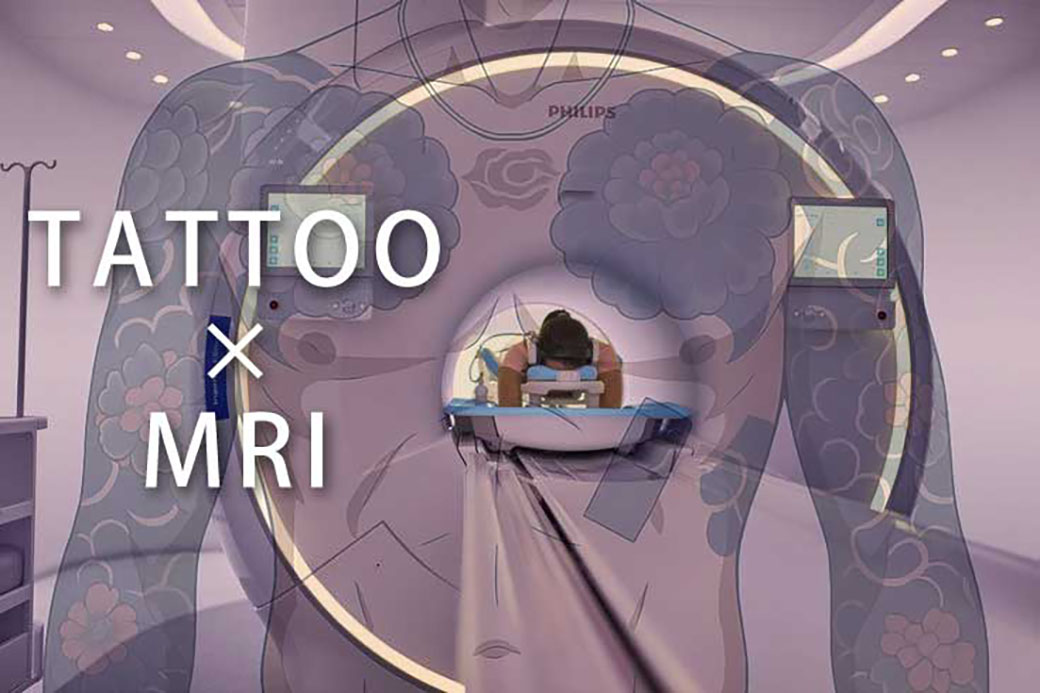
Having a tattoo does not automatically rule out an MRI scan. Policies vary by doctor and medical facility, however, so consult them in advance.
According to the Japan Association of Radiological Technologists, MRI decisions for tattooed patients are made case by case, based on the person’s circumstances, medical condition, and other relevant factors. Some facilities may allow the scan after the patient signs a consent form acknowledging the potential risk of tattoo-related heating.
I cover this topic in detail—including my own MRI experience—in this article.
◆ Do tattoos increase your risk of skin cancer?
False. They can make cancer harder to detect.
There is no evidence that tattoos directly cause skin cancer.
However, if tattoo ink covers a mole that could develop into melanoma, it may become harder to monitor changes that could signal skin cancer, creating a risk of delayed detection. Regular skin checks and consultation with a specialist are recommended to support early detection and treatment.
◆ Have any Japanese lawmakers had tattoos?
True. Quite a few.
There is no rule against lawmakers having tattoos; like anyone else, it is a matter of personal choice.
One well-known example is Matajiro Koizumi, a politician and the grandfather of Junichiro Koizumi, Japan’s 87th through 89th prime minister. He was reportedly nicknamed the “Tattooed Minister” and “Tattooed Mata-san.” His tattoos are said to have extended from his back to his upper arms and ankles. Accounts differ on the imagery: some say it depicted the Nine-Dragon figure, while others identify Lu Zhishen—the “Flowery Monk” from Water Margin.
There appear to have been quite a few others as well.
More recently, Makoto Nishimoto—better known as “Super Crazy-kun”—drew attention for his full-body tattoos after winning a seat on the Miyazaki City Council in 2023, although he is not a member of the National Diet.
[DOTT] Inside the Full-Body Wabori of Politician “Super Crazy-kun”: A Dragon and Celestial Maiden Surrounded by Falling Cherry Blossoms
■Conclusion
Throughout human history, research and rediscovery have overturned accepted wisdom and produced new ideas. Something that seems unimaginable today may be common knowledge only a few years from now.
Perhaps one day we will see inks that support health, tattoos that appear or disappear on command, or technologies that allow tattoo designs to move across—or animate on—the body.